
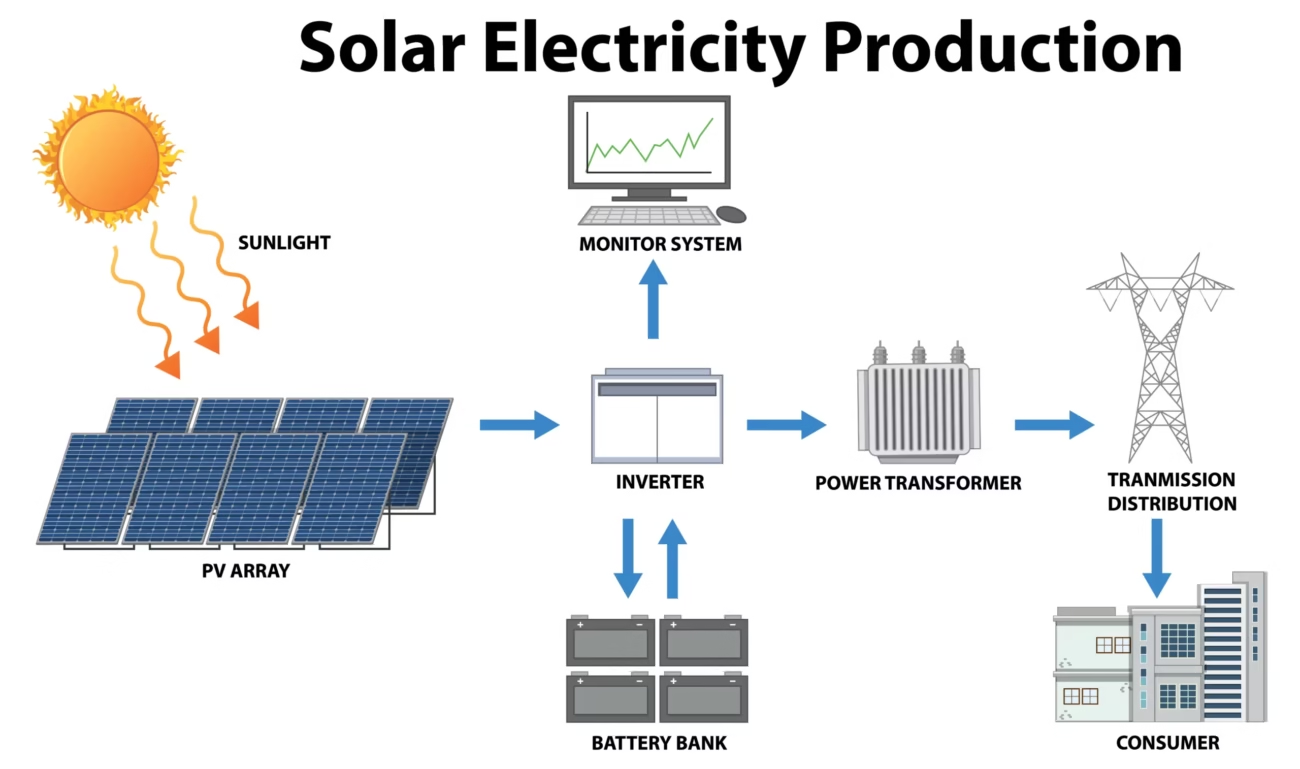
The sun — a fiery star, 93 million miles away — fuels every living thing on Earth. For centuries, we’ve worshipped its warmth and light. But in today’s age, we’ve learned something truly transformative: how to turn sunlight directly into electricity.
This is the magic of Solar Photovoltaic (PV) Technology — a quiet revolution reshaping how we power our homes, industries, and cities.
If you’ve ever seen those sleek, blue-black panels on rooftops or across vast solar farms, you’ve already witnessed this transformation in action.
⚡ How Does Solar PV Work?
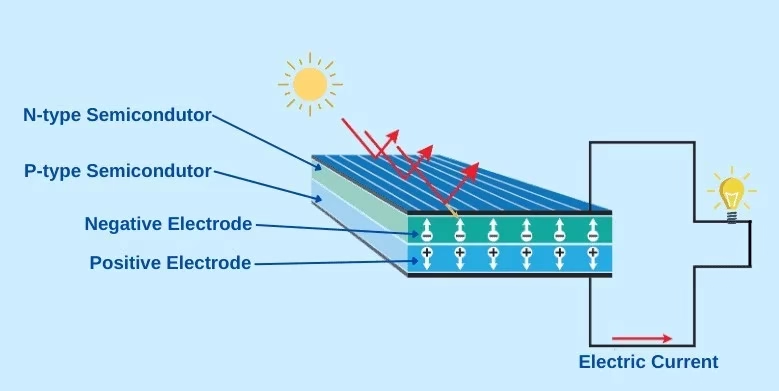
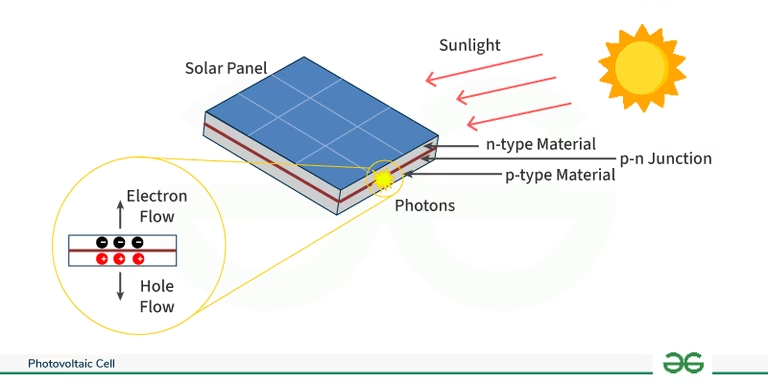
At the heart of every solar system lies the photovoltaic effect, a process where sunlight is converted directly into electricity using semiconductor materials like silicon.
Here’s a breakdown of how it generally works:
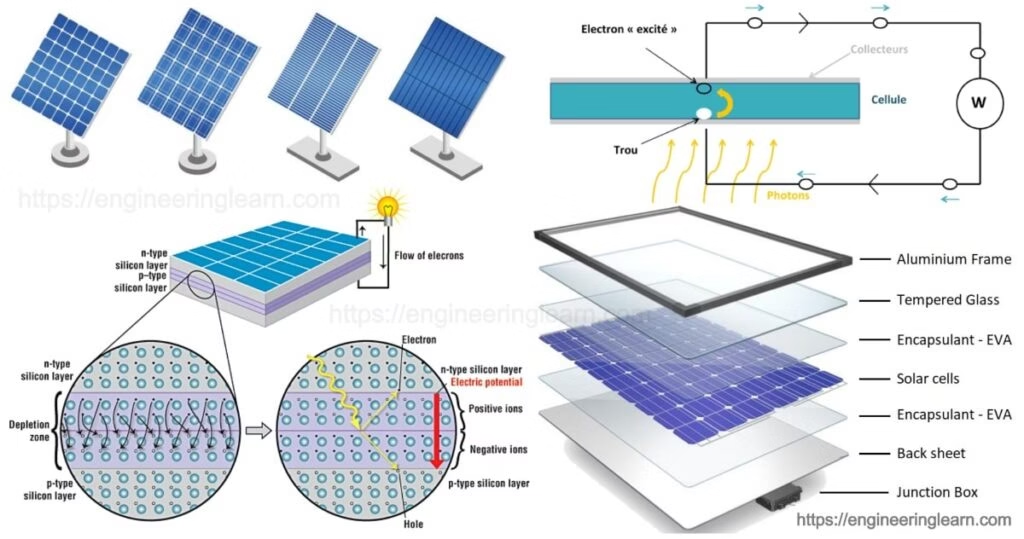
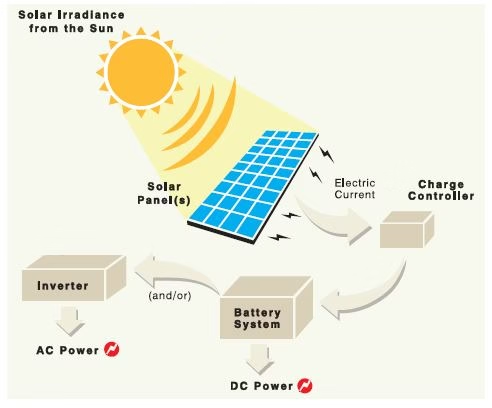
- Solar Cells: The fundamental unit of a PV system is the solar cell. These are typically made from semiconductor materials, most commonly silicon. When sunlight (photons) hits the solar cell, it excites electrons within the material, causing them to move and create an electric current.
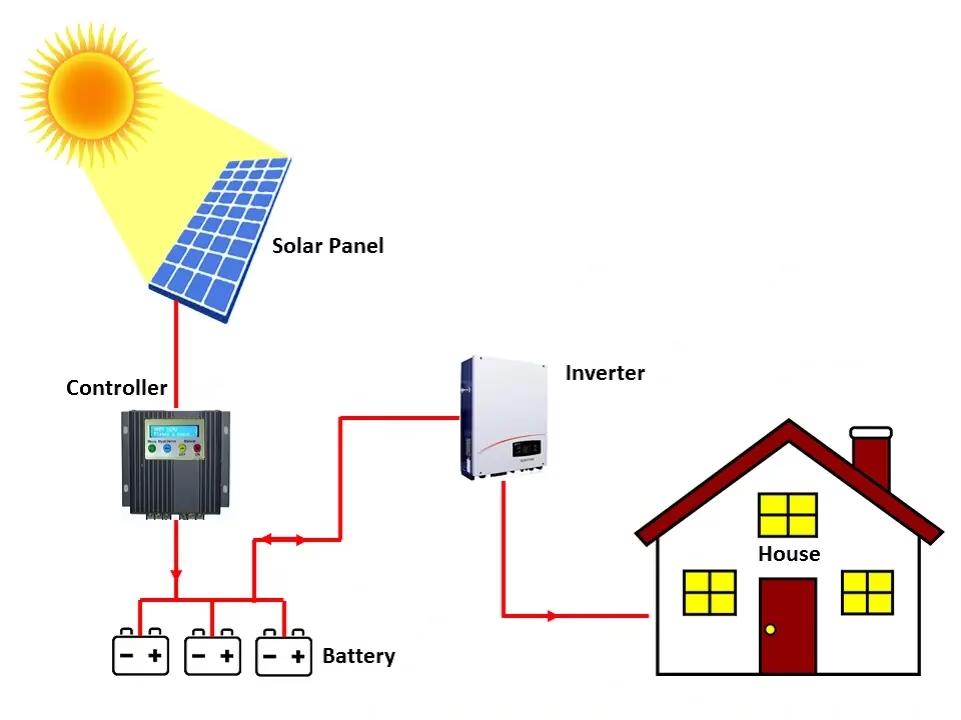
2. Solar Panels (Modules): Individual solar cells produce a small amount of power. To generate more usable electricity, multiple solar cells are connected together and encapsulated within a protective frame to form a solar panel or module.
3. Inverter and MPPT: The electricity from panels is direct current (DC). Since most appliances and grids use alternating current (AC), an inverter converts DC to AC. Modern inverters use Maximum Power Point Tracking (MPPT) technology to constantly adjust voltage and current, ensuring panels operate at peak efficiency throughout the day
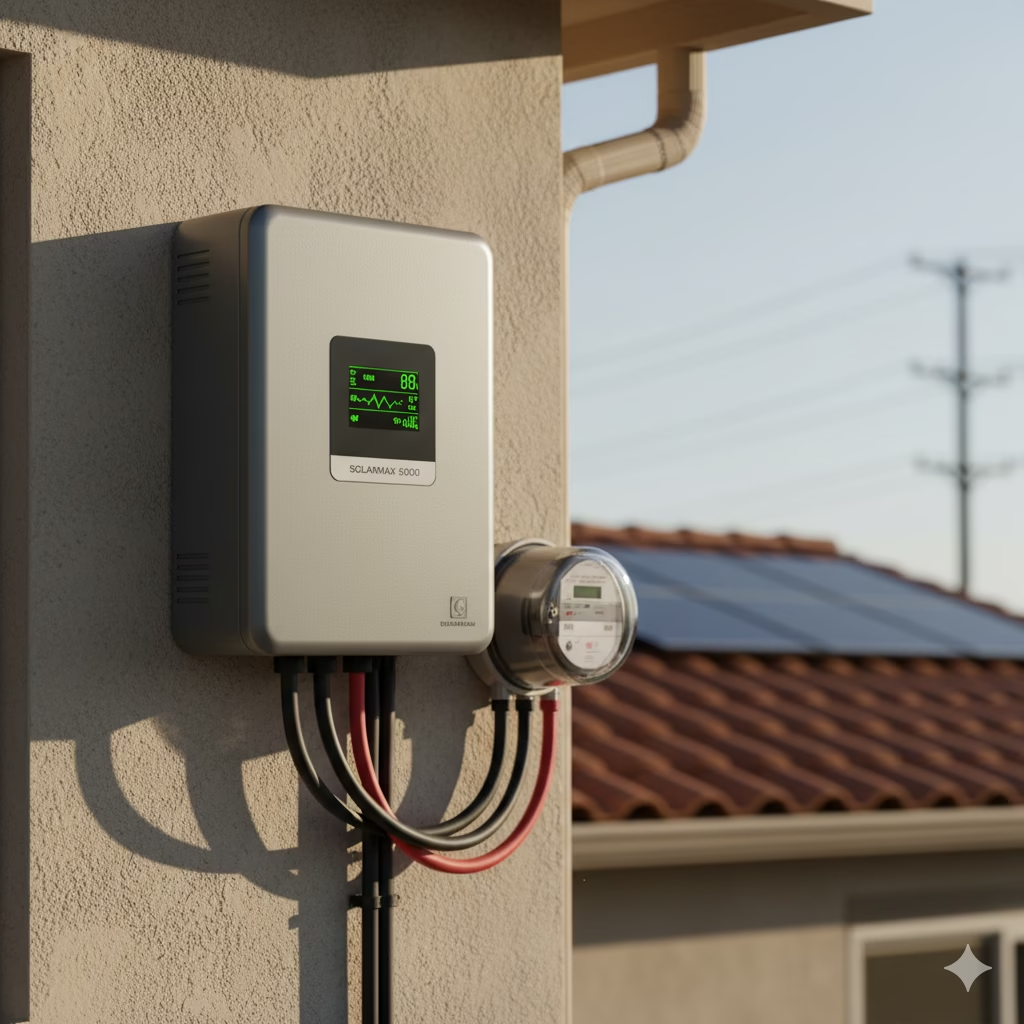
4. Balance of System (BoS): A solar PV system also includes:
- Mounting structures and racking systems.
- Cables, junction boxes, and fuses.
- Surge protection devices and isolators for safety.
These components ensure reliability and compliance with electrical standards.
Types of PV Technology:
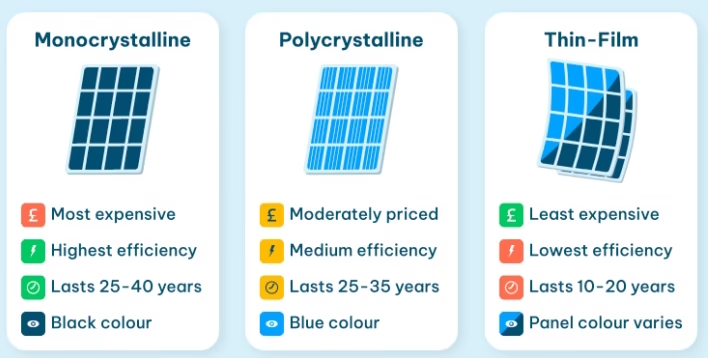
| Type | Efficiency Range | Appearance | Cost | Notes |
|---|---|---|---|---|
| Monocrystalline Silicon | 18–23% | Uniform black | High | High efficiency, longer lifespan |
| Polycrystalline Silicon | 15–18% | Speckled blue | Medium | Economical, slightly lower efficiency |
| Thin-Film (a-Si, CdTe, CIGS) | 10–13% | Matte finish | Low | Lightweight, flexible, for unique surfaces |
| Perovskite Cells | 20–25% (lab) | Variable | Low (potential) | Promising efficiency, still under research |
Advantages of Solar PV:
- Renewable Energy: Uses an inexhaustible energy source (the sun).
- Clean Energy: Produces no greenhouse gas emissions or air pollutants during operation.
- Reduced Electricity Bills: Can significantly lower or even eliminate monthly electricity costs.
- Energy Independence: Reduces reliance on fossil fuels and centralized power grids.
- Low Maintenance: PV systems generally require minimal maintenance.
Challenges:
- Intermittency: Electricity generation depends on sunlight, so output varies with time of day, weather, and seasons. This often requires energy storage solutions (like batteries) or grid integration.
- Initial Cost: While decreasing, the upfront cost of installation can still be substantial.
- Land Use: Large solar farms can require significant land area.
- Manufacturing Impact: The production of solar panels does have an environmental footprint, though it’s offset by their clean operation.
- Solar PV technology is continually advancing, with ongoing research focused on improving efficiency, reducing costs, and enhancing energy storage solutions to make solar power an even more integral part of our global energy mix
Types of Solar PV Systems: Tailoring Power to Your Needs
Solar PV systems aren’t one-size-fits-all. They broadly come in two main configurations:
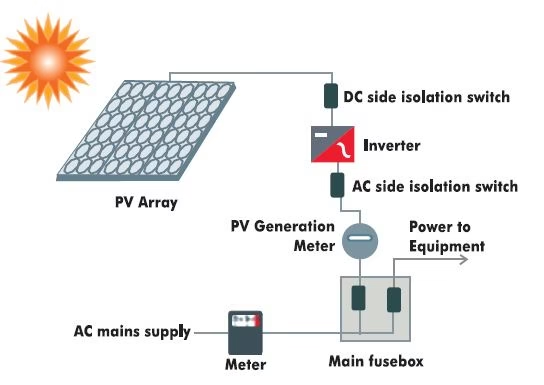
- Grid-Connected (On-Grid) Systems:
- These are the most common for residential and commercial applications.
- Your solar system is connected directly to the main electrical grid.
- When your panels produce more electricity than you’re using, the excess power can be fed back into the grid, often earning you credits (known as “net metering”).
- When your panels aren’t producing enough (e.g., at night or on cloudy days), you seamlessly draw electricity from the grid.
- The primary benefit is reducing or eliminating your electricity bill without needing expensive battery storage for daily use.
- Standalone (Off-Grid) Systems:
- These systems are completely independent of the main electrical grid.
- They are ideal for remote locations, cabins, RVs, or emergency backup power.
- A crucial component of an off-grid system is a battery bank, which stores excess solar energy for use during periods of low sunlight.
- While offering complete energy independence, they require careful sizing to ensure sufficient power and storage capacity.
How Much Sun Becomes Electricity? Understanding Efficiency
The energy conversion efficiency is a measure of how much of the solar energy is converted into electrical energy. The calculation for the energy conversion factor is,
η = (Pm / (E * A)) * 100
Where,
η = Energy conversion factor, percent.
Pm = Maximum power output, watts.
E = Solar energy, insolation, watts per square meter.
A = Area of the solar cell, square meters.
For example, what is the energy conversion efficiency of a 175-watt solar panel that measures 0.75 x 1.50 meters, if the solar insolation is 1,000 W/m²?
Since the area of the solar cell is 0.75 * 1.50 = 1.125 m², the efficiency is,
η = (175 / (1.125 * 1,000)) * 100
η = 15.6%.
This particular unit converts 15.6% of the available solar energy into electrical energy.
A common question is, “How much of the sun’s energy actually turns into electricity?” This is where solar panel efficiency comes in.
Modern commercially available solar panels typically convert anywhere from 15% to 23% of the sunlight that hits them into usable electricity. While this might sound low, it’s a remarkable feat of engineering! Consider that a traditional incandescent light bulb converts most of its energy into heat, not light.
The remaining sunlight that isn’t converted is either reflected or absorbed as heat. Scientists are constantly working to push these efficiency numbers higher, with laboratory cells achieving over 40% efficiency under concentrated sunlight. For practical, rooftop applications, continuous advancements mean we’re getting more power from smaller areas.
Why Should We Care About Solar PV?
The reasons are as bright as the sun itself:
- Clean Energy: Unlike burning fossil fuels, solar PV produces absolutely no greenhouse gas emissions during operation. It’s a breath of fresh air for our planet.
- Renewable & Abundant: The sun isn’t going anywhere for a few billion years! We have an almost infinite supply of energy, just waiting to be tapped.
- Save Money: Once installed, the “fuel” (sunlight) is free! This means significantly reduced or even eliminated electricity bills for homeowners and businesses.
- Energy Independence: Generate your own power, reduce reliance on volatile energy markets and centralized power plants.
- Low Maintenance: Solar panels are incredibly durable and require very little upkeep once installed.
Factors Affecting Performance
- Temperature Coefficient:
Efficiency drops by about 0.3–0.5% per °C above 25°C. - Orientation & Tilt:
Panels perform best when angled toward the sun’s path. - Shading:
Even minor shade can significantly reduce power output. - Dust & Soiling:
Regular cleaning can boost output by 5–10%. - Degradation Rate:
Solar panels lose about 0.5–0.8% efficiency per year, lasting 25–30 years.
The Future Is Bright
As of 2025, global solar PV capacity has crossed 1.4 terawatts, making it the fastest-growing energy source on Earth. With rapid advances in perovskite technology, battery storage, and bifacial panels, we’re entering a new solar era.
From rooftops to industrial parks, solar PV is lighting the path toward a sustainable future — one photon at a time.
💬 Final Thoughts
The journey from sunlight to electricity is nothing short of remarkable. Solar PV technology blends science, sustainability, and innovation into a single vision: clean energy for everyone.
💡 What are your thoughts on solar power? Have you considered going solar? Share your comments below!
What know more about Solar Energy Storage and How They Actually Work

Excellent Read
Very descriptive and good post