
In most commercial buildings, HVAC systems consume 40–60% of total energy.
Facility managers often focus on expensive upgrades like new chillers or cooling towers.
But what if you could achieve double-digit savings without replacing a single component?
The answer lies in one smart operational tweak:
Resetting your chiller’s condenser water temperature setpoint.
It’s a small change in your chiller control strategy that can deliver major energy efficiency gains, improve plant performance, and pay back in just a few months.
Let’s see how it works — and why it’s one of the most effective HVAC energy-saving strategies for 2025.
⚡ Enjoying this article? Stay updated with weekly HVAC & Energy Hacks — straight on WhatsApp!
💚 Join Our WhatsApp ChannelInside a Water-Cooled Chiller — The Hidden Energy Tug of War
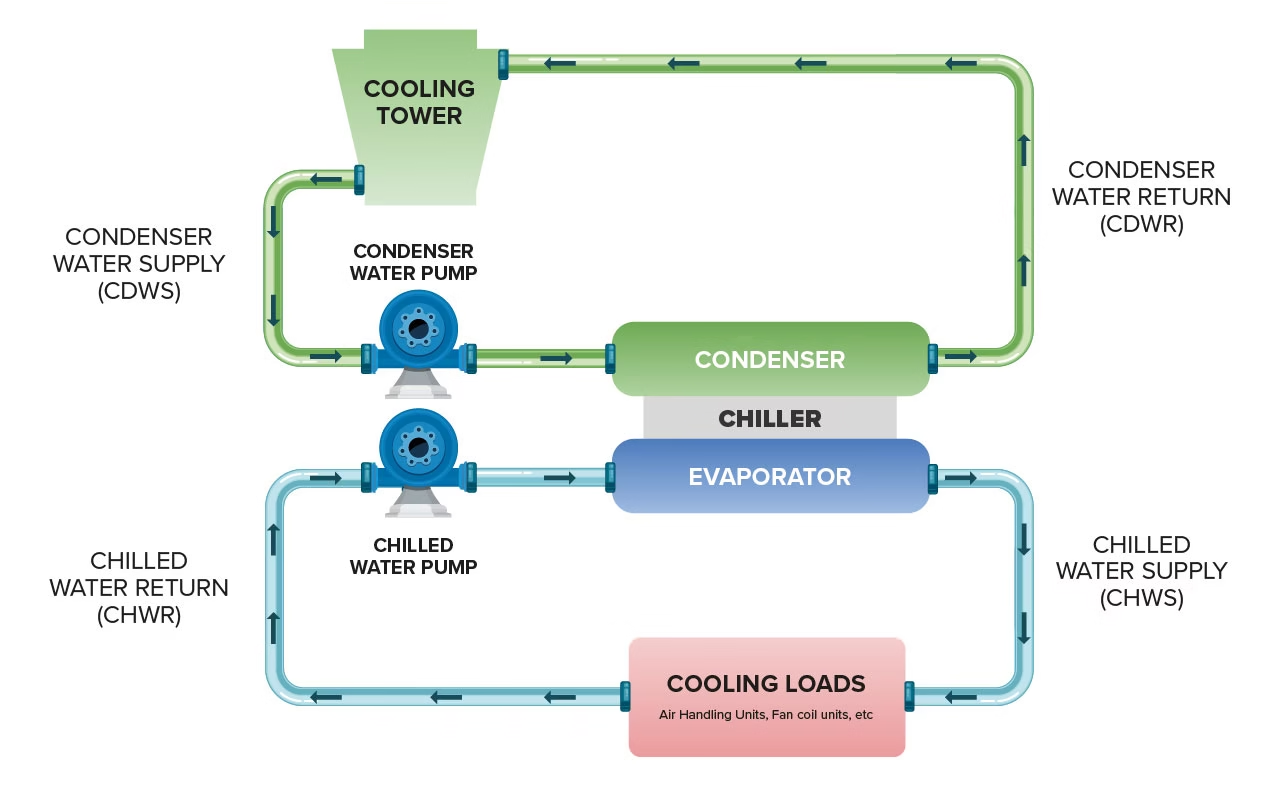
A water-cooled chiller works in four main stages:
- Evaporator (Heat Absorption): Absorbs heat from the building’s chilled water loop.
- Compressor (Pressurization): Compresses refrigerant vapor — the main consumer of electricity.
- Condenser (Heat Rejection): Rejects heat to the condenser water returning from the cooling tower.
- Expansion Valve: Drops refrigerant pressure to repeat the cycle.
Here’s the key:
The compressor’s workload depends on how easily the refrigerant can reject heat in the condenser.
That’s why condenser water temperature becomes the critical variable.
Why Condenser Water Temperature Matters
Think of the refrigerant like a runner cooling down after a sprint.
If the surrounding air (or water) is cooler, it can release heat faster.
- Warm Condenser Water = More Work:
A smaller temperature difference between refrigerant and water means harder heat rejection — forcing the compressor to work longer and consume more energy. - Cool Condenser Water = Less Work:
A larger temperature difference lets refrigerant shed heat more easily.
Result? Lower compressor head pressure reduced kW/ton, and lower operating cost.
In short: Cooler condenser water = smaller compressor effort = energy savings.
What Is Condenser Water Setpoint Reset?
Traditionally, chillers run at a fixed condenser water temperature (around 85°F / 29–30°C) to cover the hottest summer days.
But for most of the year, outdoor conditions are milder — meaning the condenser water can safely run cooler.
Condenser water reset means dynamically adjusting that temperature based on real-time operating conditions like:
- Ambient Wet-Bulb Temperature:
The cooling tower can produce colder water when air is cooler or less humid — sometimes down to 70°F (21°C). - Chiller Load:
At partial load, the chiller requires less lift, so cooler condenser water enhances efficiency even more. - Manufacturer Minimums:
Each chiller has a safe lower limit (typically ~65°F / 18°C) to prevent operational issues like surge or freezing.
How to Implement Condenser Water Reset 🔧 — Step-by-Step
- Enable Variable Speed Control
Use VFDs on cooling tower fans for precise temperature control. - Integrate with BMS or Plant Optimizer
Configure your Building Management System (BMS) to automatically adjust the setpoint based on ambient wet-bulb and chiller load. - Monitor & Fine-Tune
Track compressor kW, fan speed, and condenser pressure weekly to confirm net energy savings. - Add Safety Limits
Maintain the manufacturer-recommended minimum temperature to prevent surge or instability.
The Energy ⚡ Payoff — Real Numbers, Real Savings
- 1–3% energy savings per 1°F drop in condenser water temperature
- 6–15% total chiller plant energy reduction achievable with proper reset logic
- ROI under 6 months in most large commercial buildings
Even though tower fans might run slightly longer, compressor energy savings far outweigh fan energy.
Example:
A 500-ton chiller operating at 0.65 kW/ton can drop to 0.58 kW/ton with just a 5°F condenser water reset.
That’s roughly 17,500 kWh saved per month in continuous operation — a massive win for both cost and carbon footprint.
Advanced Trend 2025: AI & Predictive HVAC Controls
The next frontier of HVAC optimization lies in AI.
Modern BMS platforms now use AI-driven plant optimization tools that automatically adjust condenser and chilled water setpoints using:
- Real-time IoT sensor data
- Weather forecasts
- Load prediction algorithms
These systems learn operational patterns, predict load fluctuations, and fine-tune both chiller and cooling tower parameters — achieving peak performance with minimal human intervention.
If your facility already has a digital control system, this upgrade can further boost energy efficiency and sustainability performance.
✅ Is It Right for Your Facility?
You’re a strong candidate for condenser water setpoint reset if your site has:
✔️ Water-cooled chiller plants
✔️ A Building Management System (BMS)
✔️ Variable speed cooling tower fans
This strategy is low-cost, high-impact, and completely non-invasive — no equipment change required.
🌿 The Bottom Line
Don’t let your chiller work harder than it needs to.
By intelligently resetting condenser water temperature, you can:
✅ Unlock hidden energy savings
✅ Reduce carbon emissions
✅ Move closer to net-zero building performance
All that — without replacing a single component.
Simple tweak. Smart savings. Sustainable results.

Excellent Read.
Can save upto 20% Energy consumption in big chillers