
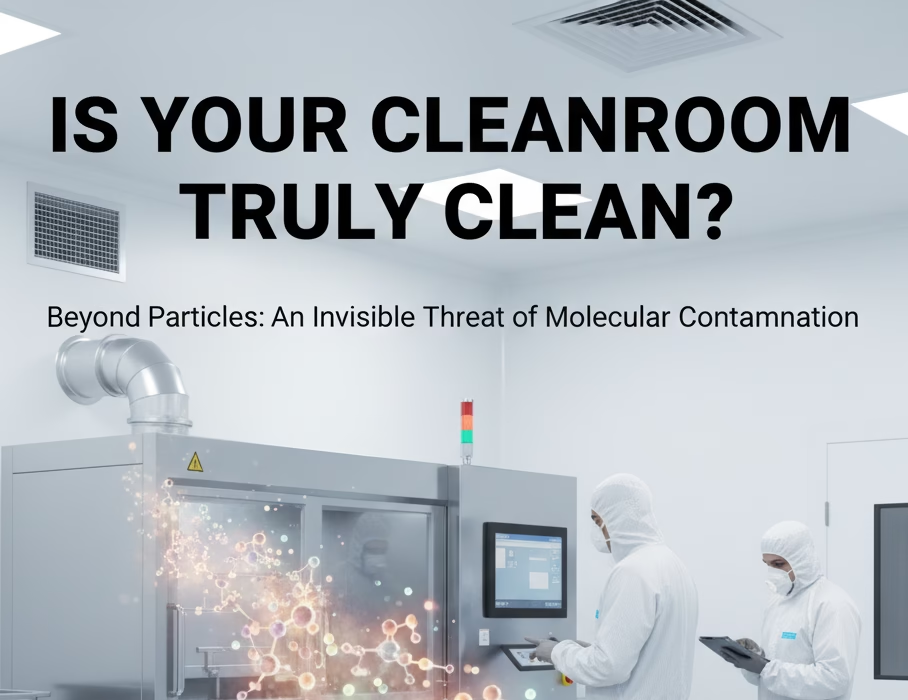
For decades, cleanroom control has been all about particles.
We’ve perfected ISO classifications, HEPA filters, and air change rates — everything designed to stop microscopic dust, lint, and skin flakes from compromising critical environments. And that focus has served us well.
But here’s the uncomfortable truth: the cleaner we’ve become, the more we’ve realized that particles are only half the story.
There’s another invisible enemy — one that easily slips through HEPA filters, corrodes metals, alters chemistry, and silently reduces yield.
It’s called molecular contamination, and it’s quickly becoming the next big challenge in cleanroom design and operation.

The Invisible Threat: What Are Molecular Contaminants?
Think about everything around you that has a smell — cleaning solvents, paints, adhesives, even your breath.
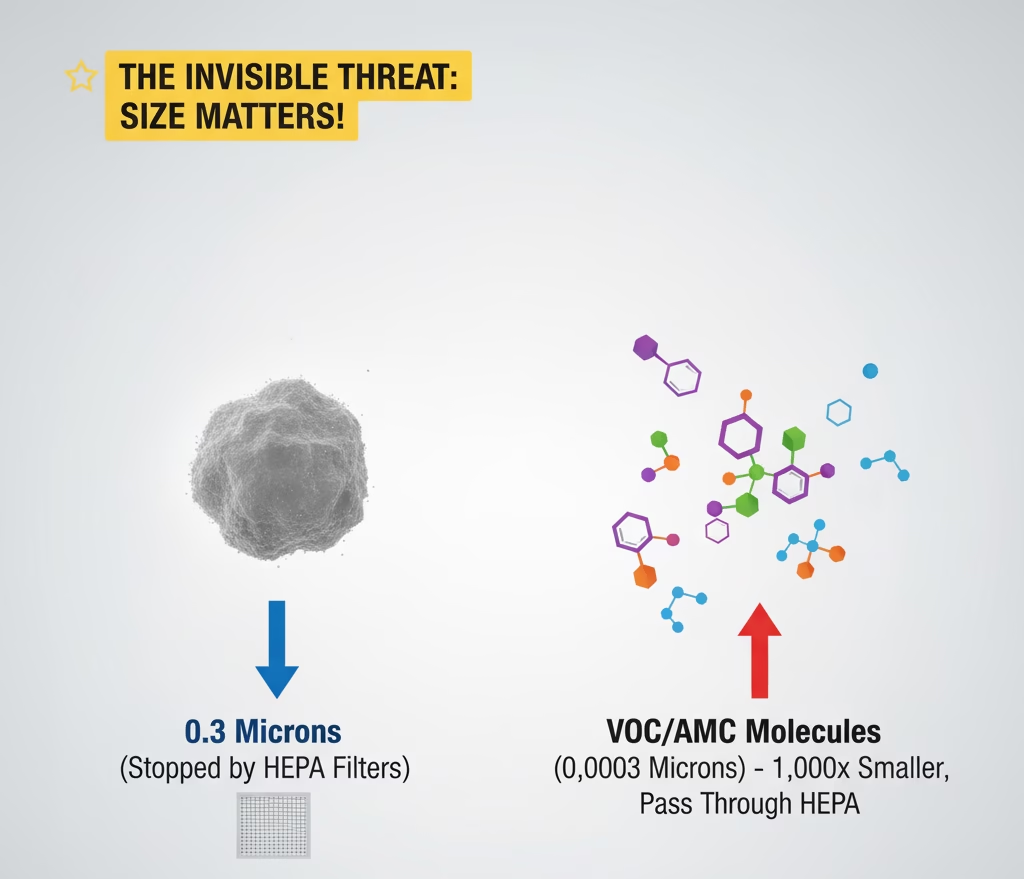
That smell often comes from Volatile Organic Compounds (VOCs) — tiny molecules that easily evaporate into the air.
Then there’s a broader category called Airborne Molecular Contaminants (AMCs) — which includes not only VOCs but also inorganic gases like acids (sulfur dioxide), bases (ammonia), or dopants used in semiconductors.
These molecules are so small that they exist in concentrations measured in parts per billion or even trillion — far below what the human nose can detect, yet potent enough to damage sensitive materials.
💡 To put it in perspective: a HEPA filter captures particles down to 0.3 microns — but VOC molecules can be 1,000 times smaller.
⚡ Enjoying this article? Stay updated with weekly HVAC & Energy Hacks — straight on WhatsApp!
💚 Join Our WhatsApp ChannelHow Molecular Contaminants Cause Damage
Unlike dust particles that physically block or settle, molecular contaminants react chemically with materials and surfaces. Here’s what they do:
- Corrosion: Acidic gases can eat away at metals and electrical components.
- Film Deposition: VOCs can form invisible films on optics, lenses, and wafers, reducing clarity or altering performance.
- Catalyst Poisoning: Certain molecules interfere with delicate reactions in drug synthesis or semiconductor fabrication.
- Material Degradation: Long-term exposure to trace VOCs can weaken polymers, adhesives, or coatings — silently reducing product life.
These are not just microscopic inconveniences; they’re molecular-scale disruptions that affect precision, reliability, and yield.
Particles Are Just the Beginning
Our cleanroom standards — such as ISO 14644-1 — focus purely on particle counts.
So technically, a Class 1 cleanroom could be perfectly particle-free yet filled with harmful VOCs if molecular control isn’t part of the design.
Let’s see how that plays out:
- Pharmaceuticals: A trace solvent vapor from a nearby adhesive or plasticizer can alter the chemical stability of a sensitive drug molecule.
- Advanced Optics: Even a monolayer of organic film can reduce light transmission through lenses or mirrors.
- MEMS & Sensors: Tiny mechanical or electronic devices can fail prematurely due to invisible chemical reactions.
In short — the environment might look clean, but it isn’t chemically clean.
The Emerging Toolkit for Molecular Contamination Control
So how do we fight an enemy that’s invisible to traditional particle counters?
Welcome to the next generation of cleanroom design — where chemical control meets airflow engineering.
🧪 1. Chemical Filtration (Adsorption & Chemisorption)
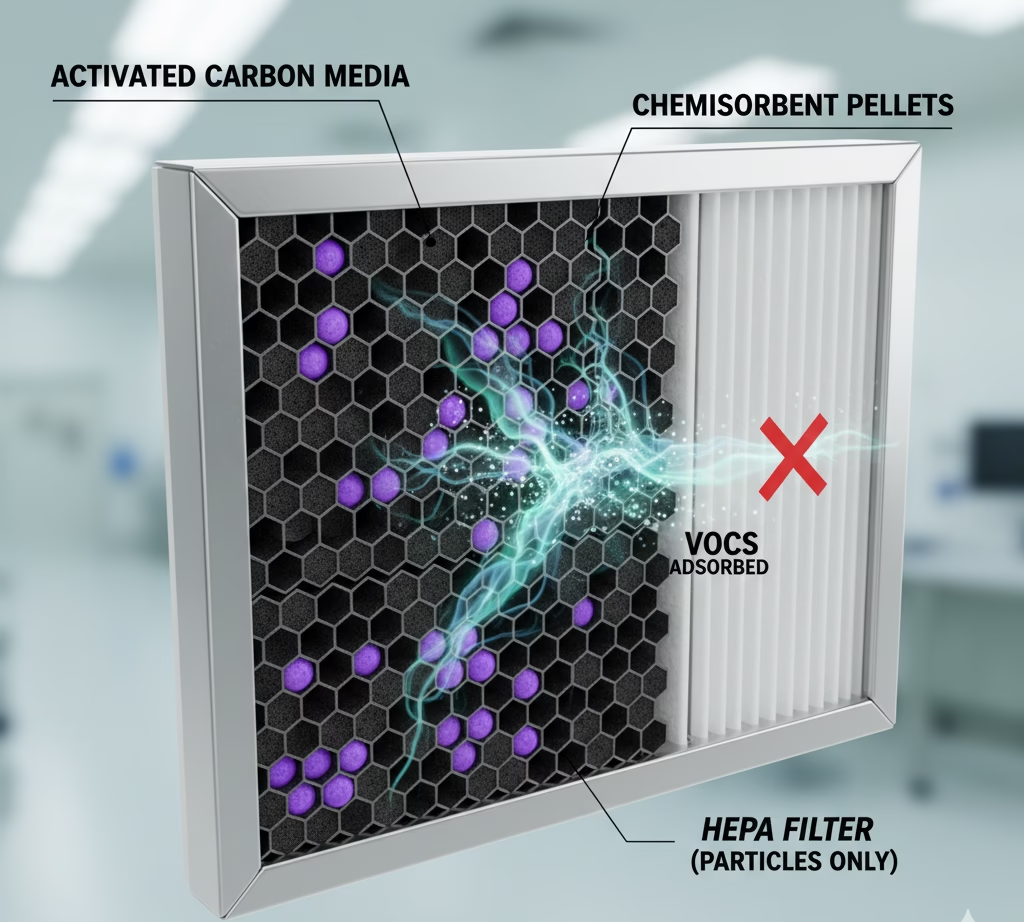
Unlike HEPA filters that trap particles, chemical filters work by capturing gases.
- Activated carbon absorbs VOCs effectively.
- Chemisorbent media are used for acidic or basic gases.
- These filters are now being integrated directly into air handling units (AHUs) or recirculating air paths.
🧱 2. Source Control & Material Selection
The most powerful strategy is prevention.
Every material inside the cleanroom — from paints and sealants to tubing and lubricants — should be low-outgassing.
That requires careful supplier selection, testing, and cross-department collaboration.
🧩 In one pharma facility, simply replacing standard epoxy flooring with low-VOC material reduced molecular emissions by over 60%.
💨 3. Enhanced Ventilation & Purging
Increasing air changes per hour helps dilute contaminants, though it adds to energy cost.
Some facilities use strategic “purging” — flushing spaces with ultra-clean air after maintenance or material changes.
📈 4. Real-Time Molecular Monitoring
Particle counters can’t see molecules — but photoionization detectors (PIDs), PTR-MS, and metal oxide sensors can.
These technologies provide early warnings of VOC spikes and validate filtration performance in real time.
🧭 5. Pressurization & Airflow Design
Even the cleanest air is useless if infiltration occurs.
Maintaining positive pressure gradients and designing airflow patterns that sweep contaminants toward exhaust points is essential for true molecular purity.
Why HVAC and Cleanroom Professionals Need to Pay Attention
You might think this is only a semiconductor issue — but that’s changing fast.
Several industry shifts are pushing molecular control into mainstream facility design:
- Miniaturization: Smaller devices are more chemically sensitive.
- Advanced Materials: New biotech and nanotech materials interact easily with airborne molecules.
- Sustainability & IAQ Goals: Cleaner air benefits both processes and people.
- Process Optimization: As processes become leaner, even molecular-level interference can disrupt quality.
- Regulatory Evolution: Future ISO and GMP guidelines may soon include molecular contamination thresholds.
In other words, this isn’t a niche issue anymore — it’s the next logical step in cleanroom evolution.
Preparing for the Next Era of Purity
Controlling particles will always be the backbone of cleanroom operations.
But the new gold standard will go further — achieving chemical cleanliness through integrated design, smarter monitoring, and material innovation.
For HVAC engineers, facility managers, and cleanroom operators, this is both a challenge and an opportunity:
to rethink air quality not just in terms of dust count, but in terms of chemical interactions that affect tomorrow’s most advanced products.
“The cleanrooms of tomorrow won’t just be particle-free — they’ll be chemistry-free.”
💡 You Might Also Like
If you found this post insightful, here are some other articles related to HVAC and MEP design that dive deeper into system performance and cleanroom engineering:
HVAC MEP Thumb Rules – CFM, Duct, Chiller, Pipe, Airflow Sizing Guide (Level 1) | Enershares
Cleanroom MEP Design under ISO 14644: What Engineers Must Deliver. | Enershares
